Preventive vs reactive maintenance: a 12-month cost comparison
A worked maintenance cost comparison with explicit assumptions, complete arithmetic and limits on what the totals establish.
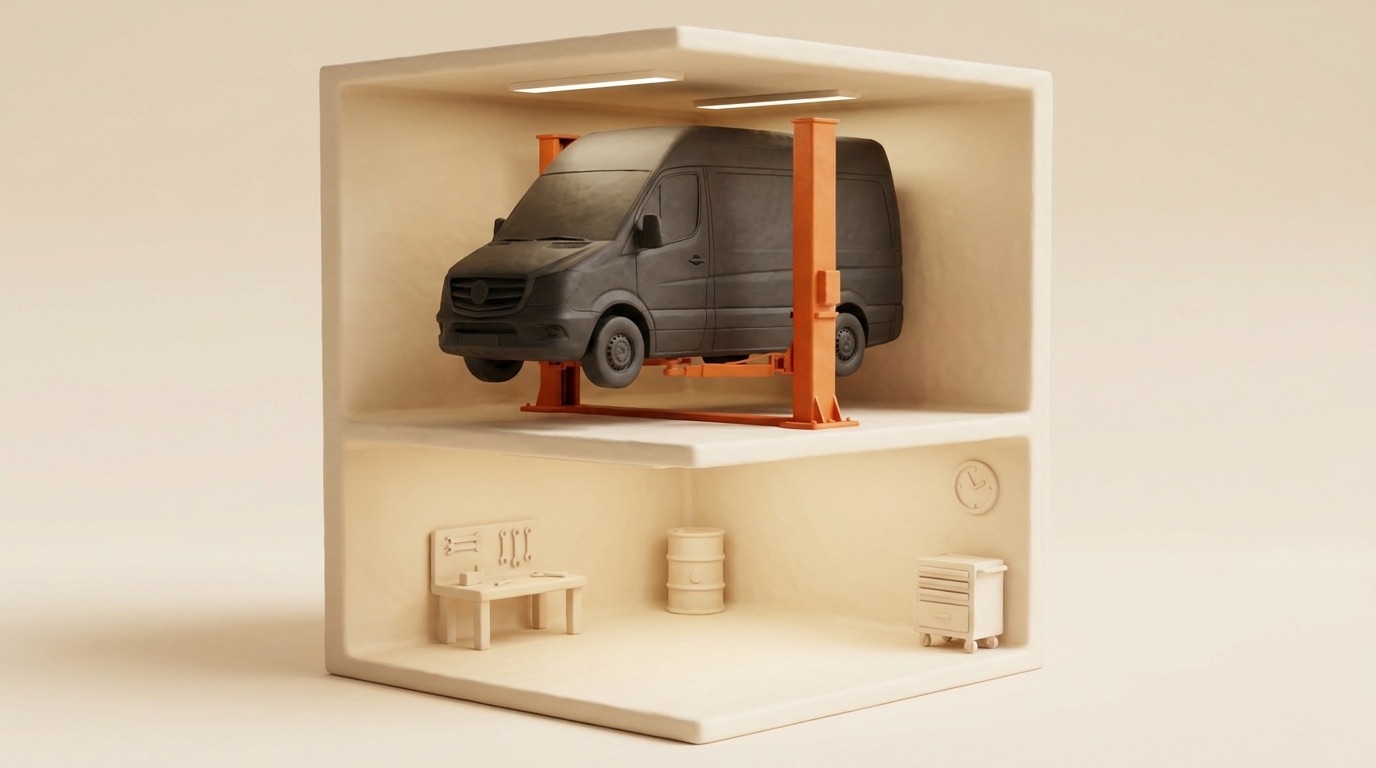
This worked model compares two 30-vehicle fleets over 12 months. It uses the cost inputs already published in this article, with Fleet A labeled preventive and Fleet B reactive. The inputs are assumptions, not audited customer accounts or measured savings delivered by Fleet by Elevera.
Costs in the model
The total below includes the nine listed cost categories. It excludes lost route revenue and any additional estimate for administrative or operational disruption.
| Category | Fleet A | Fleet B | Delta, B minus A |
|---|---|---|---|
| Scheduled service (oil, filters) | €18,400 | €4,200 | −€14,200 |
| Brakes (pads + discs) | €11,200 | €19,800 | +€8,600 |
| Tires | €9,400 | €14,100 | +€4,700 |
| Battery replacements | €2,800 | €6,400 | +€3,600 |
| Engine + drivetrain repairs | €8,100 | €31,200 | +€23,100 |
| Body damage (fleet-caused) | €4,200 | €11,800 | +€7,600 |
| Workshop labor (emergency) | €6,800 | €27,400 | +€20,600 |
| Towing | €1,400 | €8,200 | +€6,800 |
| Replacement vehicle rental | €0 | €18,400 | +€18,400 |
| Total (excl. revenue impact) | €62,300 | €141,500 | +€79,200 |
Fleet A: €18,400 + €11,200 + €9,400 + €2,800 + €8,100 + €4,200 + €6,800 + €1,400 + €0 = €62,300.
Fleet B: €4,200 + €19,800 + €14,100 + €6,400 + €31,200 + €11,800 + €27,400 + €8,200 + €18,400 = €141,500.
The difference is €141,500 − €62,300 = €79,200, or €79,200 ÷ 30 = €2,640 per vehicle over the modeled year. Relative to Fleet A, Fleet B’s listed costs are €79,200 ÷ €62,300 = 127.1% higher.
What the rows show
Towing and replacement rentals total €1,400 for Fleet A and €26,600 for Fleet B. Their difference is €25,200. Fleet A’s towing cost must remain in that comparison.
Fleet A has €14,200 more scheduled-service cost in the model. Other rows differ too, including body damage and vehicle rental. The table cannot establish that the service spending caused those differences or turn them into a preventive-maintenance return on investment.
Use the calculation with your own records
Keep the same categories and accounting period for each fleet. Record invoices and rental charges separately from estimates of lost revenue. Check whether workshop invoices already include labor before adding a separate labor category. Avoid counting the same downtime cost in both a rental invoice and an operational estimate.
These inputs do not establish recommended service intervals, the share of breakdowns that maintenance would prevent, or a typical industry saving. They also do not establish whether these cost categories overlap with another damage-loss model. Do not add the totals to a separate loss estimate without checking its definitions.
Inspect the Fleet by Elevera maintenance workflow and the current plans and included modules. Use records from your own operation to decide what the comparison means for your fleet.
A cost table needs reliable source records. Connect findings from the daily vehicle inspection routine to the relevant service work. The maintenance overview guide explains how to review that work in Fleet. Keep incident and claim costs separate until you have checked for overlapping invoices.
See more of our updates in Google Search and AI Overviews.
Add Fleet as a preferred source on GoogleCo-founder, Product · Elevera
Nedim co-founded Elevera and leads product for Fleet by Elevera. Based in Bottrop, close to the Amazon DSPs the product is built for, he is the bridge between what operators say in the yard and what ships. He works directly with Aslan Kurierdienste, the 36-van DSP whose drivers, dispatchers, and damage cases shaped every workflow in Fleet.
All articles by this author →// Continue reading
More from the Fleet Journal
Regular vehicle inspections for Amazon DSPs: build a reliable condition record
What to record at each handover, who reviews it, and how to connect a visible change to the next operational action.
Incidents per 100 shifts: how to calculate and use the rate
A practical way to compare incident frequency across operating periods, with the limits that keep the number useful.
The Amazon DSP scorecard, decoded: how fleet operations drive (and destroy) Fantastic+
Your scorecard isn't a driver problem — it's an operations system. The metrics your fleet controls, and the Wednesday routine that moves them.
Run a data-driven fleet from day one.
Join DSP operators who replaced Excel and WhatsApp with Fleet by Elevera. Book a demo to see it live.